
Projects
Ongoing & Upcoming
Scroll down for publications list & article PDFs
Timbre Semantics
Our research on timbre semantics studies the range of phenomenological experiences that musical timbres can evoke. We study how timbre can carry and generate meaning and how people communicate about timbral experiences and meanings. Much of this work concerns the kind of language we use in describing timbre, though we also consider non-linguistic means, such as crossmodal correspondences (e.g., sound and color) for communicating experiences of timbre. Currently, the CACTUS Music Lab is leading an international collaborative project examining cross-linguistic similarities and differences in timbre description around the world.
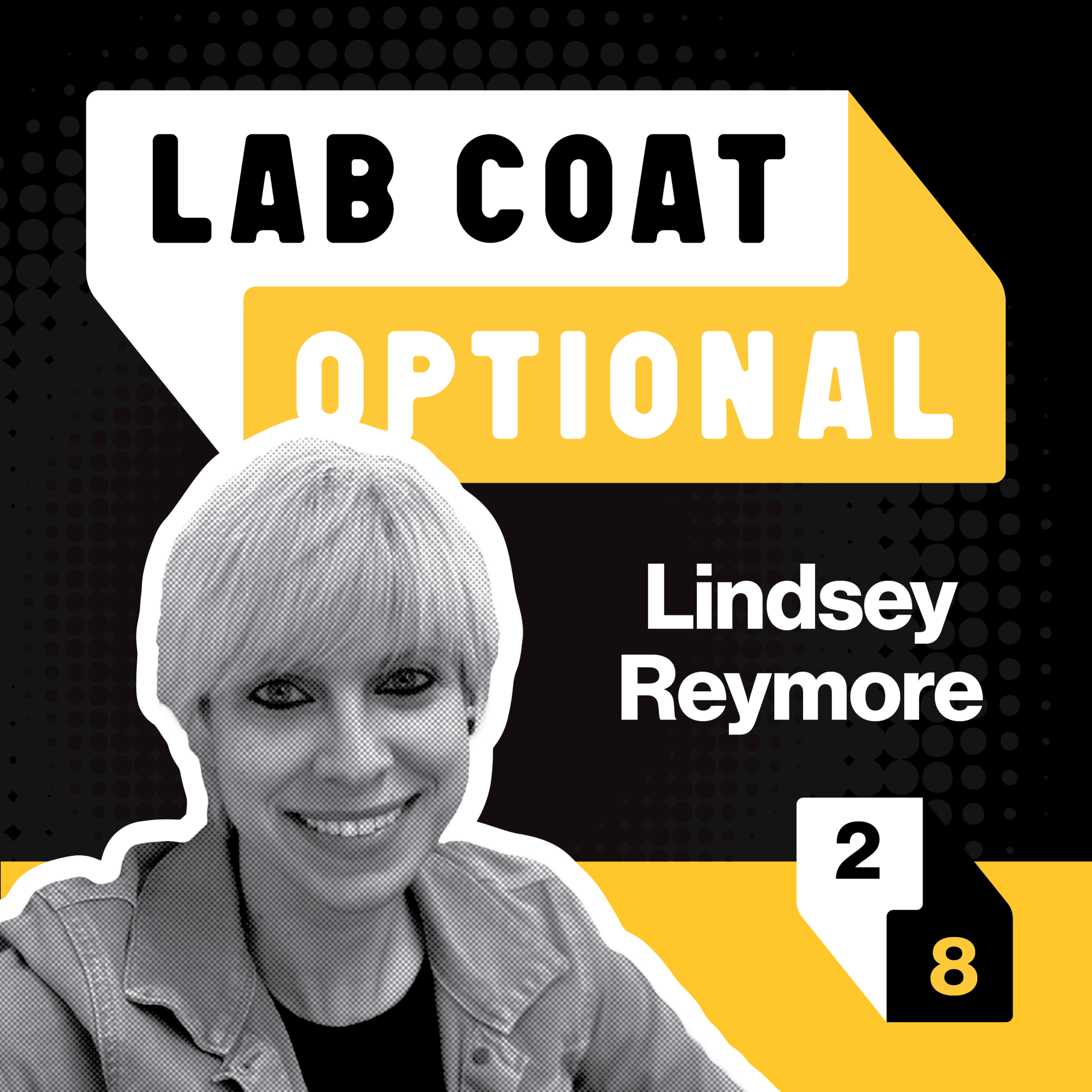
Learn more about timbre semantics with this podcast episode from Lab Coat Optional!
Click here to check out a recent project on crossmodal correspondences by R Kelvin McCartney Adesso, an MM student in composition!
Instrument-Specific Absolute Pitch (ISAP)
While absolute pitch (AP)—the ability to name musical pitches globally and without reference—is rare in expert musicians, anecdotal evidence suggests that some musicians may better identify pitches played on their primary instrument than pitches played on other instruments, an ability called Instrument-Specific Absolute Pitch (ISAP). This project, a collaboration between Dr. Reymore and Dr. Niels Christian Hansen currently funded by the Danish Ministry of Culture, is aimed at identifying the prevalence of and mechanisms behind this phenomenon.
Timbre in Popular Song (TiPS Corpus)
Timbre and texture are important perceptual cues in popular music, but relatively little research has systematically investigated how these parameters function. The TiPS corpus encodes popular songs by genre and decade, allowing for rich analysis of how timbre and texture function alongside of form in a wide variety of styles across time. Researchers from several universities are working together on this project, which is funded by a Social Sciences and Humanities Research Council grant from Canada, led by Professor Nicole Biamonte at McGill University.
Publications
Timbre Semantics
Rosner, J., Reymore, L., & McAdams, S. (In press). How sweet the sound? Understanding musical sweetness. Music Perception.
Reymore, L., Nestorova, T., Soden, K., & Marchand Knight, J. (2026, advance online publication). Timbre semantics of the singing voice. Music Perception. https://doi.org/10.1525/mp.2026.2825017
Click here to download the PDF
Reymore, L. (2026). “Computational approaches to instrumentation analysis with Timbre Trait Profiles,” book chapter in The Oxford Handbook of Orchestration Studies, pp. 356–379. https://doi.org/10.1093/9780197633489.003.0010
Click here to download the PDF
Cauchy, T. C., Tailleur, M., Reymore, L., Roche, F., & Lagrange, M. (2026). Predicting Timbre Traits for Interpretable Assessment of Musical Sound Synthesizers. arXiv preprint arXiv:2606.30369. Proceedings of the 23rd Sound and Music Computing Conference.
Click here to download the PDF
Reymore, L., & Lindsey, D. (2025). Audiovisual crossmodal correspondences with musical instrument timbre. Frontiers in Psychology, 15. https://doi.org/10.3389/fpsyg.2024.1520131 (open access)
Click here to download the PDF
Reymore, L. An interdisciplinary analysis of “ringtone” by 100 gecs. Music and Science. https://doi.org/10.1177/20592043241288333 (open access)
Click here to download the PDF
Reymore, L. (2023). Variations in timbre qualia with register and dynamics in the oboe and French horn. Empirical Musicology Review. 16(2), 231-275. https://doi.org/10.18061/emr.v16i2.8005 (open access)
Click here to download the PDF
Reymore, L., Noble, J., Saitis, C., Traube, C., & Wallmark, Z. (2023). Timbre semantic associations vary both between and within instruments: An empirical study incorporating register and pitch height. Music Perception. https://doi.org/10.1525/mp.2023.40.3.253
Click here to download the PDF
Reymore, L., Beauvais-Lacasse, E., Smith, B.K., & McAdams, S. (2022). Modeling noise-related timbre semantic categories of orchestral instrument sounds with audio features, pitch register, and instrument family. Frontiers in Psychology. 13:796422. https://doi.org/10.3389/fpsyg.2022.796422 (open access)
Click here to download the PDF
Reymore, L. (2021). Characterizing prototypical musical instrument timbres with Timbre Trait Profiles. Musicae Scientiae, 26(3) 648–674. https://doi.org/10.1177/10298649211001523 (open access)
Click here to download the PDF
Supplemental Materials (including Timbre Trait Profiles)
Reymore, L. & Huron, D. (2020). Mapping the cognitive linguistic dimensions of musical instrument timbre. Psychomusicology, 30(3), 124–144. https://doi.org/10.1037/pmu0000263
Click here to download the PDF
Instrument-Specific Absolute Pitch
Hansen, N.C., & Reymore, L. (2024). Timbral cues underlie instrument-specific absolute pitch in expert oboists. PLOS ONE. https://doi.org/10.1371/journal.pone.0306974 (open access)
Click here to download the PDF
Preregistered study: Hansen, N.C. & Reymore, L. (2021). Articulatory motor planning and timbral idiosyncrasies as underlying mechanisms of instrument-specific absolute pitch in expert musicians. PLOS ONE. https://doi.org/10.1371/journal.pone.0247136 (open access)
Click here to download the PDF
Reymore, L. & Hansen, N.C. (2020). A Theory of Instrument-Specific Absolute Pitch. Frontiers in Psychology, 11. https://doi.org/10.3389/fpsyg.2020.560877 (open access)
Click here to download the PDF
Diversity, Equity, & Inclusion in Music Research
Shea, N., Reymore L., White, C.W., Duinker, B., VanHandel, L., Zeller, M., & Biamonte, N. (2024). Diversity in music corpus studies. Music Theory Online, 30(1).https://doi.org/10.30535/mto.30.1.0 *winner of the 2025 Society for Music Theory Outstanding Publication Award (open access)